The company mainly produces a series of new plastic pipe products, including PE/PP/PVC water supply, drainage, gas, mining, chemical, municipal, and power.


National Quality Supervision and Inspection Bureau 2014 random copolymer polypropylene (PP-R) products
In 2014, a total of 330 batches of polypropylene random copolymer (PP-R) products from 327 companies in 14 provinces, autonomous regions, and municipalities including Anhui, Guizhou, Hebei, Henan, Hubei, Hunan, Jilin, Liaoning, Shaanxi, Sichuan, Jiangsu, Xinjiang, Zhejiang, and Chongqing were inspected.
Feb 04,2015
In 2014, a total of 330 batches of irregular copolymer polypropylene (PP-R) products from 327 companies in 14 provinces, autonomous regions, and municipalities including Anhui, Guizhou, Hebei, Henan, Hubei, Hunan, Jilin, Liaoning, Shaanxi, Sichuan, Jiangsu, Xinjiang, Zhejiang, and Chongqing were randomly inspected.
This inspection tested key items such as specifications and dimensions, longitudinal shrinkage rate, simply supported beam impact test, hydrostatic test at 20℃ for 1 hour, hydrostatic test at 95℃ for 22 hours, hydrostatic test at 95℃ for 165 hours, and hygiene performance. A total of 32 batches failed to meet the standards. The unqualified items included 11 batches failing in specifications and dimensions (34.4% of the total failures), 9 batches failing in the 0℃ hydrostatic test (28.1% of the total failures), 19 batches failing in the 95℃, 22-hour hydrostatic test (59.4% of the total failures), 19 batches failing in the 95℃, 165-hour hydrostatic test (59.4% of the total failures), and 1 batch exceeding the hygiene standard (lead) (3.1% of the total failures).
Related News
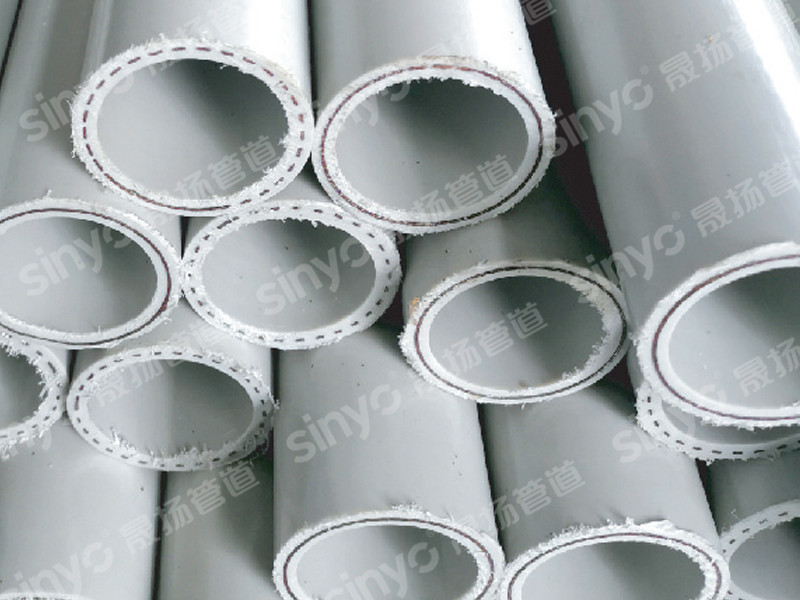
Kongwang steel strip polyethylene composite pipe
Kongwang perforated steel belt polyethylene composite pipe is a composite pipe material with a perforated steel pipe welded from cold-rolled steel strip as the reinforcing skeleton and composite thermoplastic plastic. Due to the introduction of the reinforcing skeleton, the pressure resistance of the pipe is significantly improved. Different types and grades of thermoplastic plastics can be used to produce composite pipe materials for different purposes. The perforated steel belt plastic pipes produced by the company are divided into several uses according to their uses: water supply, underground gas, hot water, chemical, and special uses.
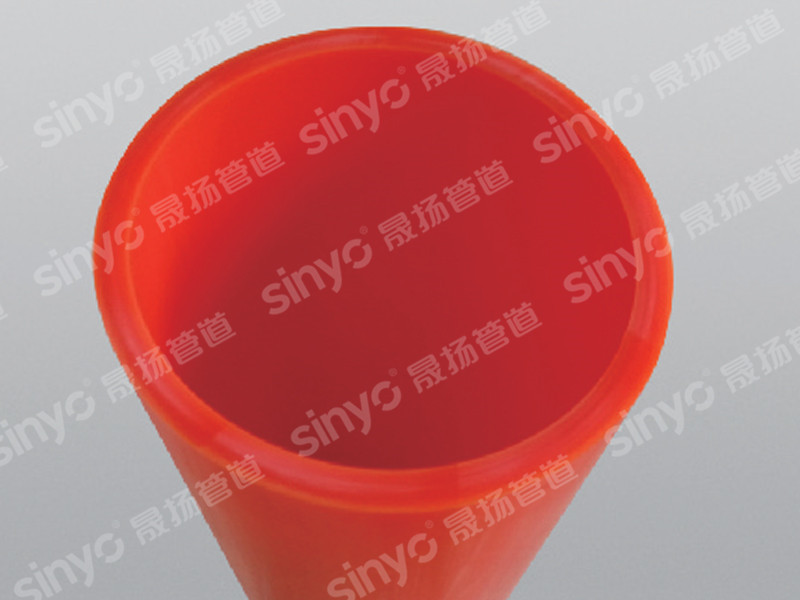
Development prospects of large-diameter (large-caliber) pressure pipes
The application of plastic pipes, both domestically and internationally, started with smaller diameters and gradually developed towards larger diameters. (There is no defined definition for large diameter; in this article, large diameter refers to diameters of 800mm and above.) It is worth noting that in recent years, there has been a major international trend towards the development of large-diameter plastic pipes, driven by environmental protection. As is well known, the world is currently facing a battle against climate change, and all countries must bear the responsibility of reducing carbon emissions. In the pipeline industry, there is undoubtedly a need to pay more attention to environmental impact.
Contact Information
Fuqing Yuanhong Investment Zone, Fujian Province
Online Message
Welcome to leave a message online, we will promptly respond and provide you with a suitable solution.