The company mainly produces a series of new plastic pipe products, including PE/PP/PVC water supply, drainage, gas, mining, chemical, municipal, and power.


The actual application of PE pipes in China's drainage system
In recent years, with the acceleration of urbanization in China, facing enormous pressure on population, resources, and the environment, in order to guarantee the sustainable development of the national economy, the Chinese government has been increasing its investment in urban infrastructure year by year. The construction of municipal public works has been accelerating, with a constantly increasing variety and specifications of products, increasing production, and improving quality. Plastic pipes, in particular, have developed even faster, becoming a current investment hotspot.
Nov 18,2011
In recent years, with the acceleration of urbanization in China, facing enormous pressure on population, resources, and the environment, in order to guarantee the sustainable development of the national economy, the Chinese government has been increasing its investment in urban infrastructure year by year. The construction of municipal public utilities is constantly accelerating, with varieties and specifications constantly enriching, output constantly increasing, and quality constantly improving. Plastic pipes, in particular, have developed even faster, becoming a current investment hotspot.
In 1933, the British company ICI first discovered PE. PE is a series of resins produced by various processes, with various structures, properties, and uses, and already accounts for one-third of the world's synthetic resin production, ranking first. One of the best uses of PE is to produce pipes for transporting any medium except strong acids and strong alkalis. According to foreign statistics, the current annual consumption of PE pipes in the global water supply pipeline field is approximately 1 million tons or more, widely used in water supply, sewage disposal, agricultural irrigation, gas transmission, mine fine particle solid transportation, as well as oil fields, chemical industry, and telecommunications.
The 'National Chemical Building Materials Industry Eleventh Five-Year Plan and 2010 Development Outline' points out: The promotion and application of plastic pipes mainly focuses on UPVC pipes and PE pipes. By 2005, in the process of new construction, reconstruction, and expansion nationwide, 70% of building drainage pipes will use plastic pipes, 50% of building water supply and hot water heating pipes will use plastic pipes, 50% of urban water supply pipes will use plastic pipes, 70% of village and town water supply pipes will use plastic pipes, 20% of urban gas pipes will use plastic pipes, and 80% of wire sheathing pipes will use plastic pipes.
Related News
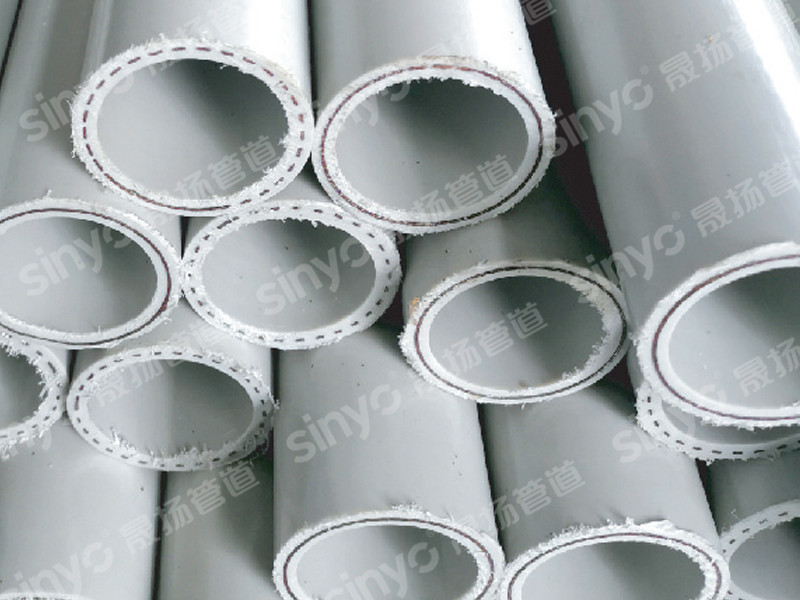
Kongwang steel strip polyethylene composite pipe
Kongwang perforated steel belt polyethylene composite pipe is a composite pipe material with a perforated steel pipe welded from cold-rolled steel strip as the reinforcing skeleton and composite thermoplastic plastic. Due to the introduction of the reinforcing skeleton, the pressure resistance of the pipe is significantly improved. Different types and grades of thermoplastic plastics can be used to produce composite pipe materials for different purposes. The perforated steel belt plastic pipes produced by the company are divided into several uses according to their uses: water supply, underground gas, hot water, chemical, and special uses.
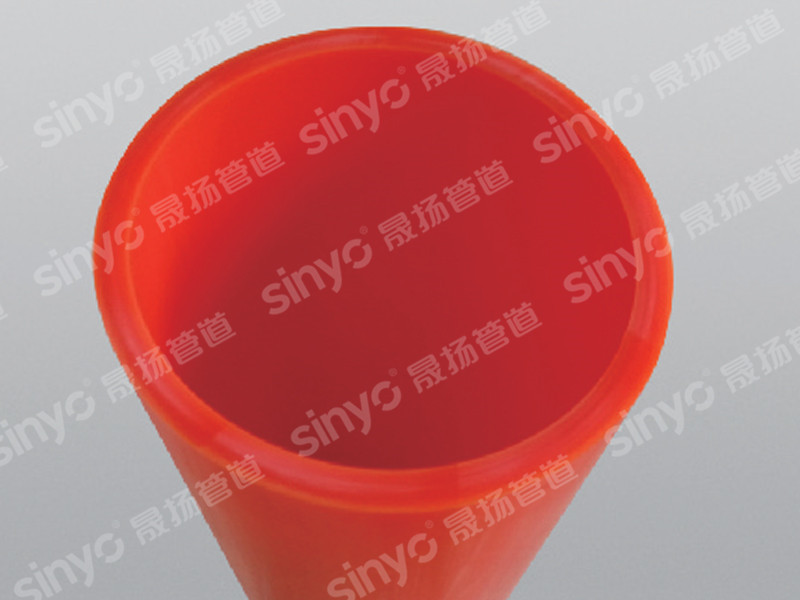
Development prospects of large-diameter (large-caliber) pressure pipes
The application of plastic pipes, both domestically and internationally, started with smaller diameters and gradually developed towards larger diameters. (There is no defined definition for large diameter; in this article, large diameter refers to diameters of 800mm and above.) It is worth noting that in recent years, there has been a major international trend towards the development of large-diameter plastic pipes, driven by environmental protection. As is well known, the world is currently facing a battle against climate change, and all countries must bear the responsibility of reducing carbon emissions. In the pipeline industry, there is undoubtedly a need to pay more attention to environmental impact.
Contact Information
Fuqing Yuanhong Investment Zone, Fujian Province
Online Message
Welcome to leave a message online, we will promptly respond and provide you with a suitable solution.