The company mainly produces a series of new plastic pipe products, including PE/PP/PVC water supply, drainage, gas, mining, chemical, municipal, and power.


Aluminum-plastic composite pipe technology
1. Product Structure and Characteristics: Aluminum-plastic composite pipes are made by co-extrusion of an inner aluminum pipe, inner and outer layers of PE, and hot-melt adhesive between the aluminum pipe and PE. The inner and outer PE layers have a molecular formula of (CH2)n, belonging to symmetrical non-polar polymers. They are chemically stable, non-toxic, corrosion-resistant, lightweight, have high mechanical strength, good heat resistance, low embrittlement temperature, and a long service life. The inner PE layer is very smooth, resulting in low flow resistance and reduced scaling, making the effective pipe diameter larger than that of metal pipes. Furthermore, the fluid will not be contaminated.
Apr 29,2011
1. Product Structure and Characteristics
Aluminum-plastic composite pipes are made by co-extrusion of a middle aluminum pipe, inner and outer layers of PE, and hot-melt adhesive between the aluminum pipe and PE. The inner and outer PE layers have a molecular formula of (CH2)n, belonging to symmetrical non-polar polymers. They are chemically very stable and have characteristics such as being non-toxic, corrosion-resistant, lightweight, having high mechanical strength, good heat resistance, low embrittlement temperature, and a long service life; at the same time, the inner PE layer is very smooth, with low flow resistance inside the pipe and is not easy to scale, making the effective pipe diameter larger than that of metal pipes, and the fluid will not be contaminated.
In addition to reinforcing the PE and greatly improving the pressure resistance of the pipe, the middle layer of the composite pipe also has the following advantages: (1). 100% oxygen barrier, completely eliminating permeation; (2). Bending and processing characteristics are similar to metal, absorbing the rebound energy of the pipe, allowing the pipe to be arbitrarily shaped; (3). Reducing the overall thermal expansion coefficient of the pipe, making the pipe size stable; (4). Used as shielding for communication lines, it can prevent interference from various audio and magnetic fields; (5). It has anti-static properties and can be used to transport fuel gas and oil; (6). Metal detectors can detect the buried location of the pipe.
2. Production Methods
Aluminum-plastic composite pipes appeared in the early 1980s and underwent significant development in the 1990s. There are two main production processes:
a. First, a lap-welded longitudinal aluminum pipe is made, and then the inner and outer plastic pipes are made on the formed aluminum pipe, which is called the lap-joint production process;
b. First, the inner plastic pipe is made, then the butt-welded aluminum pipe is made on top of it, and finally the outer plastic layer is wrapped, which is called the butt-joint production process.
Both methods connect the inner and outer plastic layers to the aluminum layer through an adhesive layer, so the pipe structure is divided into five layers in total.
Currently, the aluminum-plastic composite pipe production process in China mainly comes from Unick Company in Germany, which uses a lap-joint co-extrusion process. Its significant feature is that the aluminum layer has an overlapping structure at the weld, the aluminum layer is generally thinner, about 0.2-0.3 mm, the production equipment structure is simple, and the investment is lower. The lap-joint pipe has greatly improved overall performance compared to plastic pipes, but it also has many shortcomings, such as:
The overall wall thickness is uneven, which will affect the connection quality with the fittings.
The concentricity of each layer is low, and the roundness of the pipe is insufficient.
The aluminum layer is thin, and the mechanical strength of the pipe is poor, especially for large-diameter pipes.
Products are mainly concentrated in small-diameter pipes below 32 mm.
Strictly speaking, aluminum-plastic composite pipes produced using the lap-joint method should belong to the category of plastic pipes. The US product standard is pressure pipe ASTM F 1281, 1282.
Aluminum-plastic composite pipes produced using the butt-joint method generally use welding processes such as submerged arc welding to weld the aluminum strip into an aluminum pipe with a uniform wall thickness. The thickness of the aluminum layer of this pipe can be freely selected according to the diameter specification and pressure resistance conditions of the pipe, ranging from 0.2 to 2 mm. Because the middle layer of the pipe is a high-strength aluminum pipe, it has the advantages of metal pipes in terms of strength and reliability. The pipe has high circumferential strength, a bending radius of 4D, and a minimum of 2D. At the same time, strict control of the process ensures the dimensional accuracy of the pipe, uniform layers, and high processing speed. Compared with the lap-welding method, the equipment investment is higher, but pipes with a maximum diameter of 63 mm can be produced, and the raw material cost is basically the same. The polymer materials used can be selected and adjusted according to different application scenarios.
Strictly speaking, aluminum-plastic composite pipes produced using the butt-joint method should belong to the category of metal pipes. The US product standard is high-temperature and high-pressure pipe ASTM F1335. Butt-joint aluminum-plastic composite pipes are not yet produced by any manufacturers in China and represent a new technology with stronger vitality.
Comparison of the performance of aluminum-plastic composite pipes produced using butt-joint and lap-joint methods (32 mm pipe as an example):
Serial Number Item Butt-joint Aluminum-plastic Pipe Lap-joint Aluminum-plastic Pipe
1 Dimensions Outer diameter (mm)
32
32
Inner diameter (mm)
26
26
3
Pipe cross-sectional shape
Uniform wall thickness, good circularity
Uneven wall thickness, pipe is easily deformed
4
Bending radius
4D
5D
5
Minimum burst pressure (MPa)
9.0
3.5
3. Construction and Installation
(1) Before construction, the site should be cleaned as necessary, and during construction, prevent mud and other dirt from entering the pipeline. When the installation is interrupted, the pipe mouth should be sealed with a pipe plug.
(2) Pipe laying should be strictly carried out according to the finally confirmed design drawings.
(3) Pipe straightening is generally carried out on a relatively flat ground. Step on the pipe with your foot and roll the pipe forward to straighten it; for small-diameter pipes or local bending of the pipe, you can also straighten it by hand.
(4) Pipe cutting is generally done with special pipe shears, but saws or knives can also be used.
(5) The pipe can be bent directly, but the bending radius cannot be less than 5 times the outer diameter of the pipe. The method is to insert the pipe bending spring into the pipe and send it to the bending point. If the spring length is insufficient, the steel wire can be extended, and the force is slowly applied at that point to bend it. After shaping, remove the spring. (The bending radius of the butt-joint aluminum-plastic composite pipe can reach 4 times the outer diameter, and mechanical construction can achieve 2 times the diameter. No spring needs to be added during bending).
(6) Pipe connection
a. Cut the pipe to the required length and round the cut end with a rounder;
b. First put the nut and C-shaped retaining ring on the pipe end;
c. Insert the core of the fitting into the pipe cavity and press the core fully into place;
d. Pull back the C-shaped retaining ring and nut, and tighten the nut onto the threads of the fitting body with a wrench;
(7) Pipe fixing can be achieved using corresponding pipe clamps.
4. Application Areas
The application areas of aluminum-plastic composite pipes can be divided into the following aspects:
(1) Building materials: pipes for cold and hot water supply, drinking water supply pipes, heating systems (including pipes for floor radiant heating systems)
(2) Coal gas, natural gas: pipelines for transportation, indoor pipes
(3) Marine pipes: various pipeline systems in water transportation tools
(4) Industrial pipes
Chemical industry: various acids, alkalis, photosensitive liquids
Pharmaceutical industry: transporting liquids or powders
Petrochemical industry: transporting kerosene, gasoline and other petroleum products
Food industry: transporting alcohol, beverages and other liquids or solid-liquid mixed fluids
Gases: various industrial or medical gases
Pipes for air conditioning systems: transporting refrigerants
Pipes for pneumatic control of equipment
(5) Pipes for aerospace materials
Research on Kitec pipes by Utah State University in the United States found that aluminum-plastic composite pipes have 18% higher effective delivery capacity than copper pipes. That is, under the same conditions, copper pipes deliver 6 gallons of liquid per minute, while aluminum-plastic pipes can reach 7 gallons/minute.
The transportation of fluids using aluminum-plastic composite pipes has advantages over other pipe materials, such as light weight, easy installation, large delivery capacity, and low pressure loss. In particular, aluminum-plastic composite pipes made using the butt-welding method for aluminum pipes not only have the advantages of plastic pipes but also the strength of metal pipes. They should be the best substitute for metal pipes and are already widely used in developed regions such as Europe and the United States.
Currently, domestically produced aluminum-plastic composite pipes are mainly used in limited areas such as building water supply, solar water heaters, and indoor gas pipelines. Because all domestic aluminum-plastic composite pipes use Unick's aluminum pipe butt-welding technology, the pipes are mainly limited to small diameters and, due to limitations in the pressure resistance of the pipes, can only be used in applications with lower pressure requirements for hazardous materials (such as gas), such as the indoor sections of gas pipelines.
5. Comparison with other pipelines
Comparison of thermal conductivity of various pipelines
Pipeline Thermal Conductivity (W/m.k) Pipeline Thermal Conductivity (W/m.k)
Aluminum-plastic composite pipe 0.45 Cement pipe 1.55
Copper pipe 320 Glass pipe 0.76
Stainless steel pipe 42 Fiberglass pipe 0.52
Galvanized steel pipe 52
Comparison of comprehensive cost per meter of aluminum-plastic composite pipe A-1216 and 1/4 inch galvanized pipe
Item Pipe cost Joint cost Machinery cost Loss cost Construction cost Total cost Service life Annual cost
Aluminum-plastic pipe 8.0 6.6 0 0.08 2.00 16.68 50 0.33
Galvanized pipe 8.55 3.28 1.5 0.43 9.80 23.56 10 2.36
6. Market Prospects
Aluminum-plastic composite pipes have not yet been popularized in China. They are a national key new product, a key product of the national science and technology achievement promotion plan, and a recommended product for national Xiaokang residential construction and engineering construction.
In recent years, China has carried out a large amount of work on the promotion and application of plastic pipes in construction, such as:
Shanghai Municipal Construction Commission's "Notice on Implementing the Prohibition of the Use of Hollow Steel Doors and Windows and Galvanized Steel Water Pipes in Some Construction Projects in the City"
The Ministry of Construction, the Ministry of Chemical Industry, the China Light Industry Federation, the State Building Materials Bureau, and the China Petrochemical Corporation jointly issued Document Jianke [1997] No. 154, "National Chemical Building Materials Promotion and Application "Ninth Five-Year Plan" and 2010 Development Plan Outline" and "Regulations on Accelerating the Promotion and Application of Chemical Building Materials and Restricting and Eliminating Backward Products," all proposing that plastic pipes should be used as essential products for modernized residential construction, and aluminum-plastic composite pipes, with their superior performance, will surely be favored by the market.
(Excerpt from Jiangsu Chemical Building Materials Information Network)
Previous:
Related News
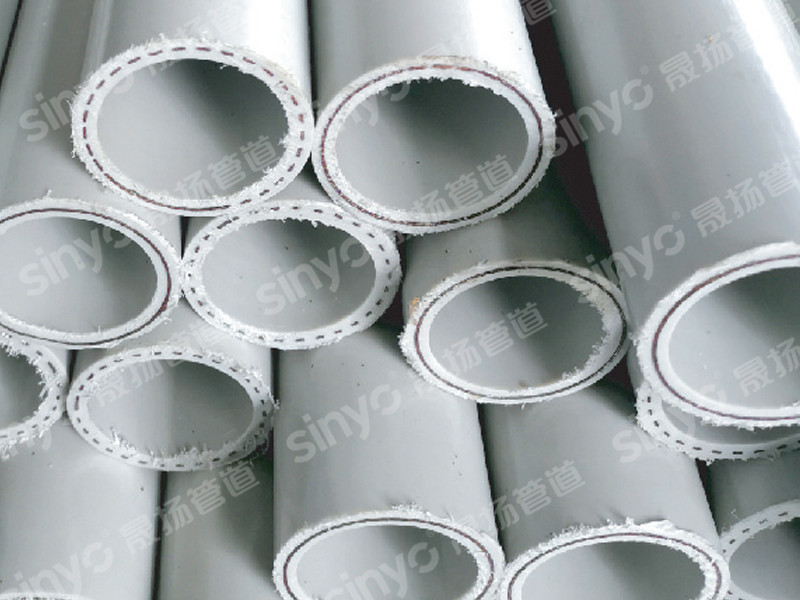
Kongwang steel strip polyethylene composite pipe
Kongwang perforated steel belt polyethylene composite pipe is a composite pipe material with a perforated steel pipe welded from cold-rolled steel strip as the reinforcing skeleton and composite thermoplastic plastic. Due to the introduction of the reinforcing skeleton, the pressure resistance of the pipe is significantly improved. Different types and grades of thermoplastic plastics can be used to produce composite pipe materials for different purposes. The perforated steel belt plastic pipes produced by the company are divided into several uses according to their uses: water supply, underground gas, hot water, chemical, and special uses.
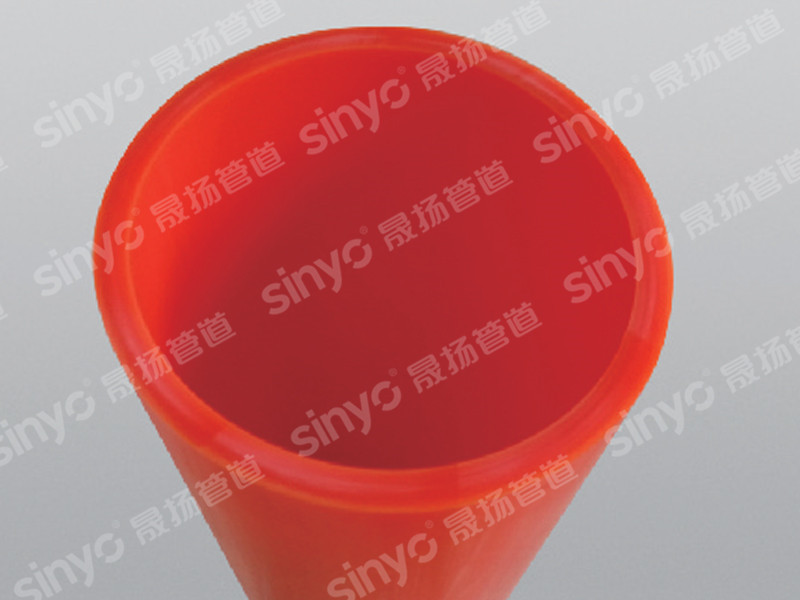
Development prospects of large-diameter (large-caliber) pressure pipes
The application of plastic pipes, both domestically and internationally, started with smaller diameters and gradually developed towards larger diameters. (There is no defined definition for large diameter; in this article, large diameter refers to diameters of 800mm and above.) It is worth noting that in recent years, there has been a major international trend towards the development of large-diameter plastic pipes, driven by environmental protection. As is well known, the world is currently facing a battle against climate change, and all countries must bear the responsibility of reducing carbon emissions. In the pipeline industry, there is undoubtedly a need to pay more attention to environmental impact.
Contact Information
Fuqing Yuanhong Investment Zone, Fujian Province
Online Message
Welcome to leave a message online, we will promptly respond and provide you with a suitable solution.