The company mainly produces a series of new plastic pipe products, including PE/PP/PVC water supply, drainage, gas, mining, chemical, municipal, and power.


Ordos Kangbashi New District: Urban pipe networks are being densely woven and extended
As the saying goes, "A towering building rises from the ground, and its strength relies on its foundation." Without a solid foundation, how can a modern new city's high-rise buildings be realized? For Kangbashi New District to achieve its goal of becoming a livable and workable modern central city, it must focus on the "foundation" project of infrastructure construction, including water, roads, and communications. Since the beginning of this year, citizens of the new district have witnessed the completion of roads and bridges one after another.
Apr 29,2011
A tall building rises from the ground, and its strength relies on its foundation. Without a solid foundation, how can a modern new city's high-rise buildings be realized? For Kangbashi New District to achieve its goal of becoming a modern, livable, and workable central city, it must focus on the "foundation" project of building infrastructure such as water, roads, and communications. Since the beginning of this year, citizens of the new district have witnessed the completion of roads and bridges one after another.
At the first plenary meeting of the New District Party Committee and Management Committee in 2010, Secretary Shi Yanjie proposed that the construction of urban water, road, and communication infrastructure should be a priority in ensuring and improving people's livelihood, improving urban functions, and building a modern city. He called for increased investment and accelerated construction. Relevant departments in the new district have focused on the spirit of the meeting, strengthening the construction of urban infrastructure such as water, roads, and communications, and have made significant progress.
Construction in the North District is in full swing. The total length of roads in phases one and two of the North District project is 53.6 kilometers, and the total length of the network management is 387 kilometers. Both have fully commenced and will be completed by the end of the year. Among them, the design mileage of the phase one weak current pipeline is 25 kilometers, and 5 kilometers have been completed. The integrated urban-rural demonstration area is catching up. Eleven municipal roads are planned, including five roads in phase one with a total length of approximately 9331 meters. The pipeline network is designed for 51.4 kilometers, with a water supply pipeline of approximately 15.3 kilometers, a drainage pipeline of approximately 19 kilometers, and 8.8 kilometers of rain and sewage pipelines completed. The Dongwei Fourth Road project is progressing rapidly. Currently, road excavation and filling, roadbed shaping, gravel cushion, base layer, base layer paving, and road curbstone installation have all been completed, and surface paving has begun. The construction of rainwater, water supply, and sewage pipelines is nearing completion. The North Bank Cultural Park in Xiahu District is also proceeding in an orderly manner. The 3-meter-wide and 5-meter-wide park roads, rainwater, sewage, water supply, and underground pipeline networks for lighting have been basically completed. In addition, Bridge No. 2, leading from Erdos Street to Azhen, was completed in August this year, making travel between Kangbashi and Yiqi more convenient.
The Kangbashi New District water supply pipeline project in Dongsheng was successfully put into operation on August 6, 2010. The project has a dual-line pipeline of 38 kilometers and a total investment of 160 million yuan. It is part of the Ordos city center water supply project, planning to supply 200,000 tons of water per day to the central area of Ordos, including 50,000 tons per day to Kangbashi New District. After completion, the project will become another lifeline for water supply in the new district, effectively alleviating the pressure on water supply during peak summer water consumption. In addition, the Muken Nao water source development project has completed hydrological and geological exploration, pumping tests, and water resource assessment. The feasibility study report and water and soil conservation plan have also been approved by the Autonomous Region Water Resources Department. The total planned investment for this project is 555,819,900 yuan, and the daily water supply capacity after completion will reach 60,000 tons.
In interviews with the heads of relevant departments and construction units, reporters learned that the planning and design of water, road, and communication infrastructure in the new district fully embodies forward-looking vision, modern awareness, and the spirit of keeping pace with the times. They continuously improve and optimize every detail and step of the construction plan to ensure the organic unity of preemptive, sustainable, coordinated, and operable characteristics. At the same time, in order to ensure the quality of the project and not affect the timely completion, all relevant parties have fulfilled their responsibilities and done their best. Through a three-pronged approach—strict supervision by the competent authorities, meticulous implementation by the construction units, and full commitment from frontline workers—all work is proceeding smoothly according to plan.
The city-wide scientific development on-site observation meeting requires that in recent years, the functions of the city's central urban area should be further improved, urban and rural infrastructure should be significantly improved, and the phased tasks of integrated urban-rural development should be completed. As an important part of the city's central urban area, the gradual improvement of infrastructure in Kangbashi New District is accelerating the pace of urban construction in Ordos.
Next:
Related News
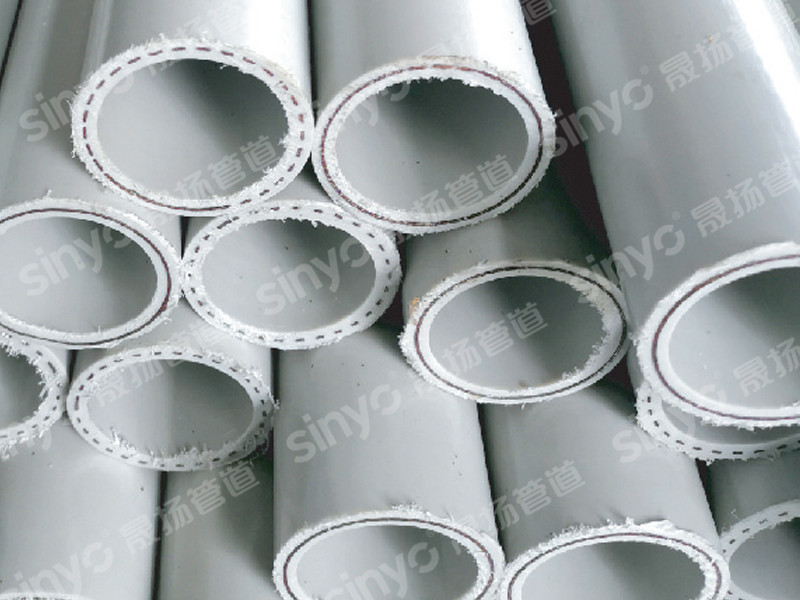
Kongwang steel strip polyethylene composite pipe
Kongwang perforated steel belt polyethylene composite pipe is a composite pipe material with a perforated steel pipe welded from cold-rolled steel strip as the reinforcing skeleton and composite thermoplastic plastic. Due to the introduction of the reinforcing skeleton, the pressure resistance of the pipe is significantly improved. Different types and grades of thermoplastic plastics can be used to produce composite pipe materials for different purposes. The perforated steel belt plastic pipes produced by the company are divided into several uses according to their uses: water supply, underground gas, hot water, chemical, and special uses.
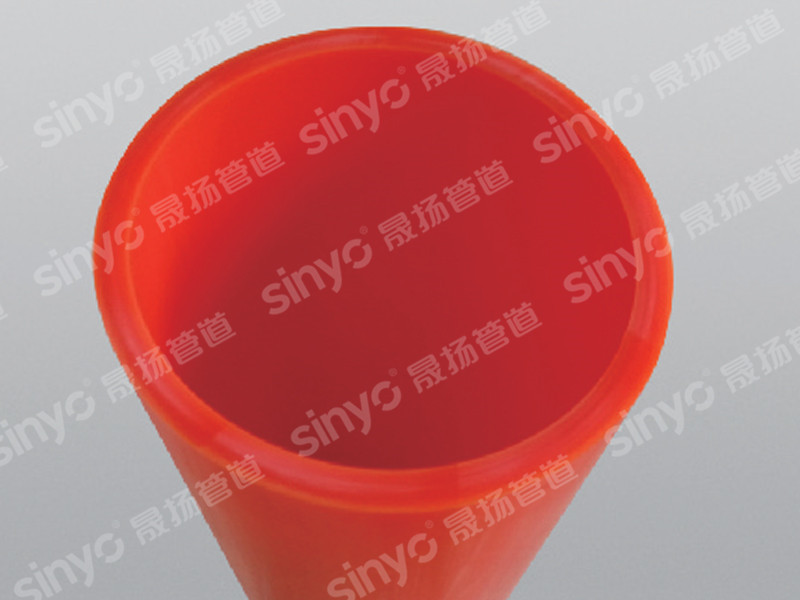
Development prospects of large-diameter (large-caliber) pressure pipes
The application of plastic pipes, both domestically and internationally, started with smaller diameters and gradually developed towards larger diameters. (There is no defined definition for large diameter; in this article, large diameter refers to diameters of 800mm and above.) It is worth noting that in recent years, there has been a major international trend towards the development of large-diameter plastic pipes, driven by environmental protection. As is well known, the world is currently facing a battle against climate change, and all countries must bear the responsibility of reducing carbon emissions. In the pipeline industry, there is undoubtedly a need to pay more attention to environmental impact.
Contact Information
Fuqing Yuanhong Investment Zone, Fujian Province
Online Message
Welcome to leave a message online, we will promptly respond and provide you with a suitable solution.