The company mainly produces a series of new plastic pipe products, including PE/PP/PVC water supply, drainage, gas, mining, chemical, municipal, and power.


Guizhou invested 5 billion yuan during the 11th Five-Year Plan period to solve the drinking water problem for 10.6 million rural residents.
At the construction site of the "Anda Xinchang Long-distance Pipeline Water Supply Project" in Jinsha County, various types of engineering machinery are busy shuttling between the water source site and the pipeline laying site, ensuring that the main project will be basically completed by the end of the year. This project, currently the largest long-distance pipeline water supply project in Guizhou Province's rural drinking water safety projects, will solve the drinking water safety problems of 69,900 people in Anluo Township, Datian Township, and Xinhua Township in Jinsha County after completion.
Apr 29,2011
At the construction site of the "Anda Xinchang Long-Distance Water Pipeline Project" in Jinsha County, various types of engineering machinery are busy moving between the water source site and the pipeline laying site, ensuring that the main project will be basically completed by the end of the year.
This project, currently the largest long-distance water pipeline project in Guizhou Province's rural drinking water safety projects, will solve the drinking water safety problems of 69,900 people in Anluo Township, Datian Township, and Xinhua Township in Jinsha County after completion.
Comrades from the Drinking Water Department of the Water Resources Department said that there are more than 100 such drinking water projects under construction across the province.
During the "Eleventh Five-Year Plan" period, although only 6.15 million people were included in the "quench thirst plan," in reality, a total of 10.6 million rural residents in the province with drinking water difficulties said goodbye to their difficulties thanks to various drinking water projects.
Between 1996 and 2004, Guizhou Province implemented two phases of the "Thirst Relief Project" and the "Difficulty Relief Project," providing drinking water for more than 18 million rural residents. However, a 2005 survey and assessment showed that 23 million rural residents in Guizhou Province still faced unsafe drinking water problems.
Since 2006, the construction of rural drinking water safety projects in Guizhou Province has been fully launched. The "three-level linkage investment" has formed a solid project funding chain, making the "Eleventh Five-Year Plan" period the fastest-developing and most effective period for rural drinking water safety work in Guizhou Province.
It is estimated that by the end of this year, a total of 4.944 billion yuan will have been invested in rural drinking water projects across the province. Of this, 3.012 billion yuan is from central government investment, 1.546 billion yuan is from provincial and lower-level government budgets, and rural households have invested and contributed more than 300 million yuan in labor and materials.
Currently, Guizhou Province is carrying out the "Twelfth Five-Year Plan" for rural drinking water safety across the province, breaking down and implementing the task of solving the drinking water safety problems of 2 to 3 million rural residents each year from 2008 to 2012, and completing the design of individual projects and the overall implementation plan one year in advance.
Related News
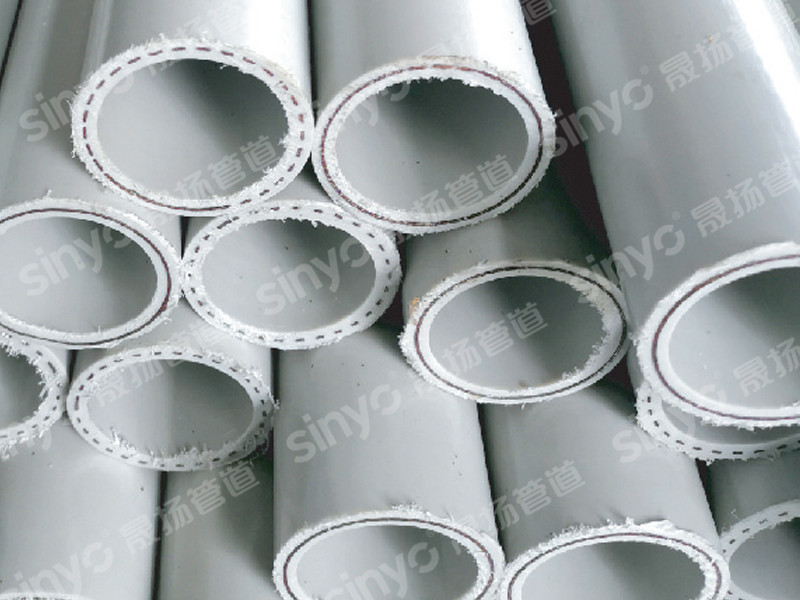
Kongwang steel strip polyethylene composite pipe
Kongwang perforated steel belt polyethylene composite pipe is a composite pipe material with a perforated steel pipe welded from cold-rolled steel strip as the reinforcing skeleton and composite thermoplastic plastic. Due to the introduction of the reinforcing skeleton, the pressure resistance of the pipe is significantly improved. Different types and grades of thermoplastic plastics can be used to produce composite pipe materials for different purposes. The perforated steel belt plastic pipes produced by the company are divided into several uses according to their uses: water supply, underground gas, hot water, chemical, and special uses.
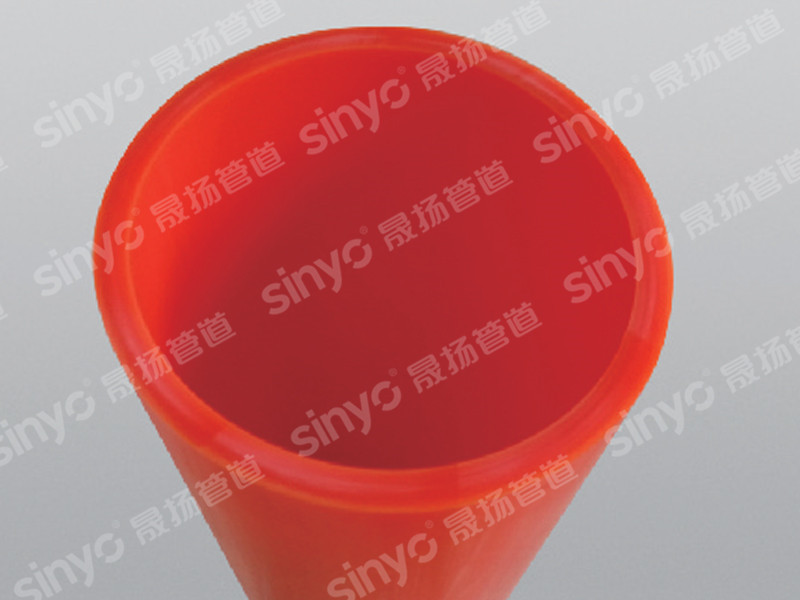
Development prospects of large-diameter (large-caliber) pressure pipes
The application of plastic pipes, both domestically and internationally, started with smaller diameters and gradually developed towards larger diameters. (There is no defined definition for large diameter; in this article, large diameter refers to diameters of 800mm and above.) It is worth noting that in recent years, there has been a major international trend towards the development of large-diameter plastic pipes, driven by environmental protection. As is well known, the world is currently facing a battle against climate change, and all countries must bear the responsibility of reducing carbon emissions. In the pipeline industry, there is undoubtedly a need to pay more attention to environmental impact.
Contact Information
Fuqing Yuanhong Investment Zone, Fujian Province
Online Message
Welcome to leave a message online, we will promptly respond and provide you with a suitable solution.