The company mainly produces a series of new plastic pipe products, including PE/PP/PVC water supply, drainage, gas, mining, chemical, municipal, and power.


A technical seminar on risk monitoring and safety management of food-related plastic products was held in Beijing
On December 29, 2014, the "Technical Seminar on Risk Monitoring and Safety Management of Food-related Plastic Products," organized by the China Plastics Processing Industry Association, was held in Beijing. 58 people attended the meeting, including Cao Jian, executive vice president of the China Plastics Association; experts from national food safety-related departments; heads of some branches of the China Plastics Association; experts and scholars from universities and research institutes; and representatives from food contact plastic product companies. The meeting was chaired by Tian Yan, deputy secretary-general of the China Plastics Association.
Mar 04,2015
On December 29, 2014, the "Technical Seminar on Risk Monitoring and Safety Management of Food-Related Plastic Products," organized by the China Plastics Processing Industry Association, was held in Beijing. Fifty-eight people attended the meeting, including Cao Jian, executive vice president of the China Plastics Association; experts from national food safety-related departments; heads of some branches of the China Plastics Association; experts and scholars from universities and research institutes; and representatives from food-contact plastic product companies. The meeting was chaired by Tian Yan, deputy secretary-general of the China Plastics Association.
In his opening remarks, Executive Vice President Cao Jian briefly introduced the purpose of the meeting, pointing out the current situation and existing problems facing food-contact plastic-related products. He hoped that relevant production enterprises would standardize production in accordance with relevant national laws, regulations, and standards to ensure product quality.
Eight experts gave presentations: Wang Zhaohui, senior engineer from the Beijing Haidian District Product Quality Supervision and Inspection Institute and the National Food Quality Safety Supervision and Inspection Center; Zhang Jianbo, deputy director of the Third Department of Standards, National Food Safety Risk Assessment Center; Dr. Zhu Lei, Third Department of Standards, National Food Safety Risk Assessment Center; Professor Weng Yunxuan, Beijing Technology and Business University, College of Materials and Mechanical Engineering, National Plastics Products Quality Supervision and Inspection Center (Beijing); Sun Shushi, chief engineer, Beijing Jiacheng Additives Research Institute; Professor Wu Daming, Beijing University of Chemical Technology, School of Mechanical and Electrical Engineering; Shi Xunruo, deputy director, China Plastics Association Plastics Additives Professional Committee; and Xing Guangquan, factory director, Plasticizer Factory, Lanfan Group Co., Ltd. Their presentations covered topics such as "Risk and Control Research of Plastic Food Contact Materials and Products," "Introduction to the Revision Progress of National Standard GB9685," "Introduction to the National Standard "General Hygiene Regulations for the Production of Food Contact Materials and Products," "Introduction to Relevant Regulations and Standards for Plastic Products Used in Food Packaging," "Safety and Environmental Protection Requirements of Plastic Products and the Selection and Application of Antioxidants," "Current Status and Response to Toxic and Harmful Substances in Plastic Products," "Issues Concerning Polyvinyl Chloride Food-Contact Plastic Materials—A Discussion on Heat Stabilizer Types and Materials," and "Current Status and Application of Plasticizers Used in Food-Contact Plastics in China."
Senior Engineer Wang Zhaohui introduced the current problems and situation facing food contact materials and products in China, briefly described the framework of the national standard system for food contact materials and products under construction, introduced the increasingly strengthened supervision of food-related products in China, and the new situation of food contact materials and products internationally. He also explained the risk control approaches and relevant responsibilities of various parties for plastic food contact materials and products.
Deputy Director Zhang Jianbo introduced the progress of the revision of National Standard GB 9685, stating that the revised draft has been submitted to the Ministry of Health and Family Planning for public consultation.
Dr. Zhu Lei introduced the "General Hygiene Regulations for the Production of Food Contact Materials and Products," pointing out that China has not yet established mandatory safety standards for food contact materials and products, and this regulation will fill this gap. The standard has been submitted for approval.
Professor Weng Yunxuan introduced China's regulations and standards for food-use plastic packaging and briefly explained laws and regulations such as the Product Quality Law, the Provisional Regulations on the Recycling and Utilization of Packaging Resources, and the Implementation Measures of the Product Production License Management Regulations.
Chief Engineer Sun Shushi introduced the safety and environmental protection requirements of plastic products and the selection and application of antioxidants.
Professor Wu Daming analyzed the status and importance of plastic products in the national economy, introduced typical toxic and harmful substances in plastic products, their hazards, and relevant laws and regulations issued at home and abroad, and put forward relevant policy suggestions from a technical perspective.
Deputy Director Shi Xunruo introduced the policies, regulations, and laws on food-contact PVC products (especially PVC cling film) in the EU, the United States, Japan, and South Korea, as well as the relevant laws and regulations on plasticizers and heat stabilizers in the EU, the United States, and Japan. She also introduced recent domestic regulations on food packaging material additives.
Factory Director Xing Guangquan analyzed China's plasticizer market and product structure and introduced relevant laws and regulations on plasticizers at home and abroad in recent years.
The eight reports comprehensively and meticulously introduced the current situation of food-contact plastic materials and products (including additives) at home and abroad. During the discussion session, experts and representatives held lively exchanges on product standards and quality control.
In his concluding remarks, Vice President Cao Jian hoped that the participating branches would carefully study and analyze the problems existing in their industry's food-contact products. He pointed out that the plastics industry should rely on quality and standards to grow stronger, and the association should strengthen publicity on plastic products to guide consumers' rational use.
Related News
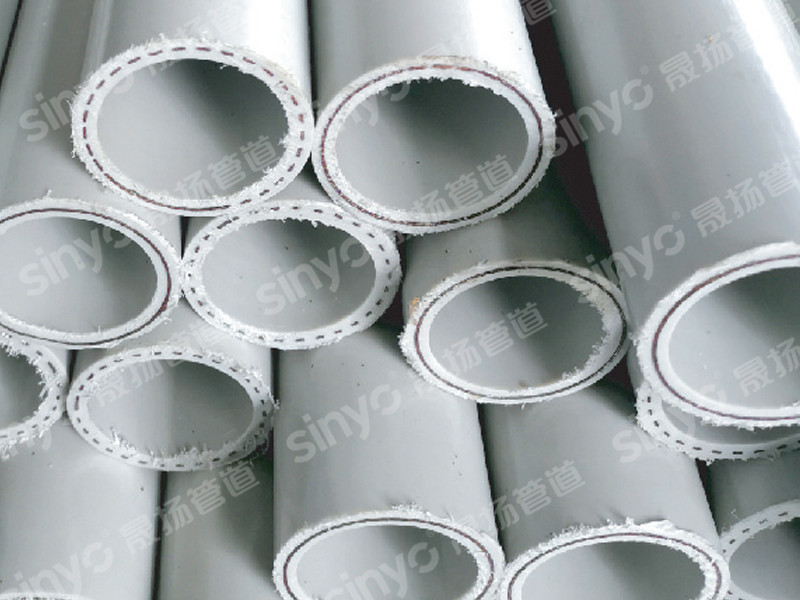
Kongwang steel strip polyethylene composite pipe
Kongwang perforated steel belt polyethylene composite pipe is a composite pipe material with a perforated steel pipe welded from cold-rolled steel strip as the reinforcing skeleton and composite thermoplastic plastic. Due to the introduction of the reinforcing skeleton, the pressure resistance of the pipe is significantly improved. Different types and grades of thermoplastic plastics can be used to produce composite pipe materials for different purposes. The perforated steel belt plastic pipes produced by the company are divided into several uses according to their uses: water supply, underground gas, hot water, chemical, and special uses.
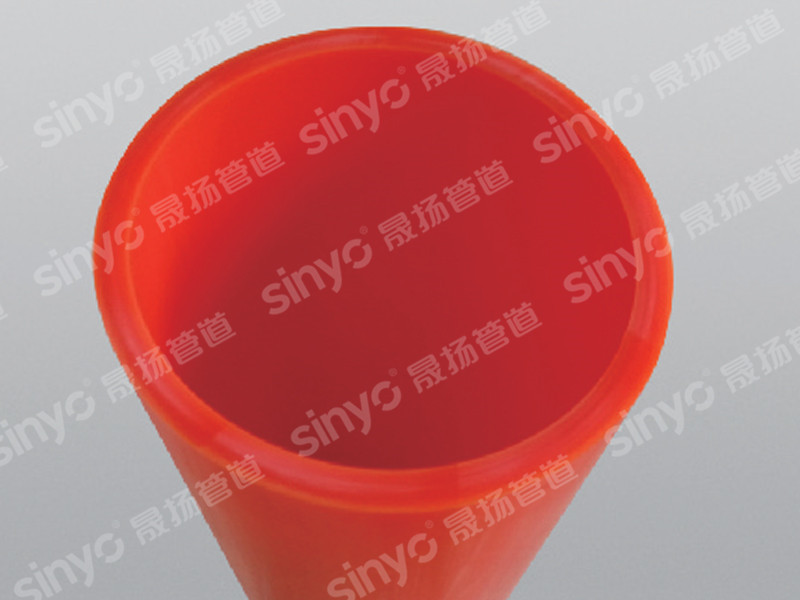
Development prospects of large-diameter (large-caliber) pressure pipes
The application of plastic pipes, both domestically and internationally, started with smaller diameters and gradually developed towards larger diameters. (There is no defined definition for large diameter; in this article, large diameter refers to diameters of 800mm and above.) It is worth noting that in recent years, there has been a major international trend towards the development of large-diameter plastic pipes, driven by environmental protection. As is well known, the world is currently facing a battle against climate change, and all countries must bear the responsibility of reducing carbon emissions. In the pipeline industry, there is undoubtedly a need to pay more attention to environmental impact.
Contact Information
Fuqing Yuanhong Investment Zone, Fujian Province
Online Message
Welcome to leave a message online, we will promptly respond and provide you with a suitable solution.