The company mainly produces a series of new plastic pipe products, including PE/PP/PVC water supply, drainage, gas, mining, chemical, municipal, and power.


CHINAPLAS 2012 International Rubber and Plastics Exhibition, Asia's No.1 and the world's No.2 international rubber and plastics exhibition, returns to Shanghai in April
CHINAPLAS 2012 (The 26th China International Plastics and Rubber Industry Exhibition) will be held in Shanghai from April 18 to 21, 2012 at the Shanghai New International Expo Centre.
Aug 12,2011
CHINAPLAS 2012 International Rubber and Plastics Exhibition (the 26th China International Plastics and Rubber Industry Exhibition) will return to Shanghai from April 18 to 21, 2012, held grandly at the Shanghai New International Expo Centre.
The CHINAPLAS International Rubber and Plastics Exhibition, first held in 1983, boasts 25 successful editions. It is the only plastics and rubber industry exhibition in China sponsored by EUROMAP (European Plastics and Rubber Machinery Manufacturers Association) and the only one recognized by UFI (Global Association of the Exhibition Industry). With strong support from numerous domestic and international plastics, rubber, and downstream industry associations, CHINAPLAS International Rubber and Plastics Exhibition has become an important platform for companies worldwide to enter the Chinese and Asian emerging markets and establish international distribution networks.
CHINAPLAS 2011 International Rubber and Plastics Exhibition successfully concluded on May 20. The exhibition attracted 2,435 exhibitors from 34 countries and regions, setting a new record with an area exceeding 180,000 square meters. It has been widely recognized as the second largest international rubber and plastics exhibition globally. The four-day exhibition was unprecedentedly successful, with 94,084 visitors, a 15.5% increase from the previous year, of which 20.27% were from overseas.
From April 18-21, 2012, CHINAPLAS 2012 International Rubber and Plastics Exhibition will make a strong comeback to the Shanghai New International Expo Centre. The scale will reach a new high, with an expected exhibition area of 200,000 square meters, including 11 product exhibition zones and 11 national/regional pavilions, occupying all 17 exhibition halls in the east, west, and north wings of the New International Expo Centre.
China's new five-year plan ushers in new market dynamics.
During the 12th Five-Year Plan period (2011-2015), China will focus on developing seven strategic emerging industries: energy conservation and environmental protection, new generation information technology, bio-industry, high-end equipment manufacturing, new energy, new materials, and new energy vehicles. In the next five years, the development of smart grids, wind power, solar energy, and new energy vehicles will create huge demand for advanced materials, modified materials, bioplastics, special rubbers, and precision energy-saving processing equipment, promoting the upgrading of the plastics and rubber industry.
Shanghai – one of the mature areas for China's economic and industrial development.
East China is one of the fastest-growing and most mature regions in China's economic development and is also an important research and production base for plastic raw materials. In 2010, the output of plastic products in East China reached 24.66 million tons, accounting for 42% of the national total. Shanghai, the center of East China, gathers many of the world's leading rubber and plastic product and machinery manufacturers. In 2010, Shanghai's total output of plastic products was 2.04 million tons, and the total output of resins (including polyester) was 4.906 million tons, a 27% increase compared to 2009. Currently, Shanghai has formed a development strategy of high technology content and high added value.
During the 12th Five-Year Plan period, Shanghai will focus on developing new engineering plastics, plastic alloys, modified composite materials, building and decoration materials, automotive parts and interior and exterior trim, and new materials for electronic information and communication engineering such as wires, cables, and optical cables, such as liquid crystal polymer materials and stealth materials, to meet the requirements of major and key projects such as aerospace, marine engineering, wind power, and urban rail transit construction. Therefore, the Chinese government will use the 12th Five-Year Plan as an opportunity to vigorously develop high-tech, high value-added new materials and innovative products, introducing advanced global products, technologies, and solutions to meet the higher requirements of various downstream industries. CHINAPLAS International Rubber and Plastics Exhibition closely follows industry trends and introduces innovative products from around the world to the Chinese and Asian markets.
Secure a favorable exhibition position and enjoy the best promotional services.
Many exhibitors have booked booths for next year's exhibition and are confidently preparing to make a splash again. Companies can submit booth applications immediately through the exhibition website to participate in this industry event and enjoy the best promotional services provided by CHINAPLAS 2012 International Rubber and Plastics Exhibition.
Visitors can also register online to visit next year's exhibition, exempting the 20 RMB entrance fee and receiving various discounts.
Related News
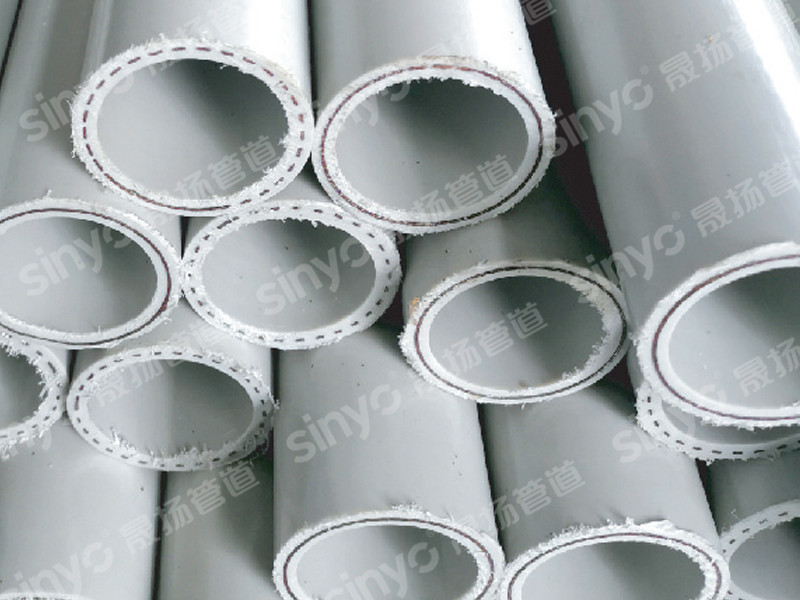
Kongwang steel strip polyethylene composite pipe
Kongwang perforated steel belt polyethylene composite pipe is a composite pipe material with a perforated steel pipe welded from cold-rolled steel strip as the reinforcing skeleton and composite thermoplastic plastic. Due to the introduction of the reinforcing skeleton, the pressure resistance of the pipe is significantly improved. Different types and grades of thermoplastic plastics can be used to produce composite pipe materials for different purposes. The perforated steel belt plastic pipes produced by the company are divided into several uses according to their uses: water supply, underground gas, hot water, chemical, and special uses.
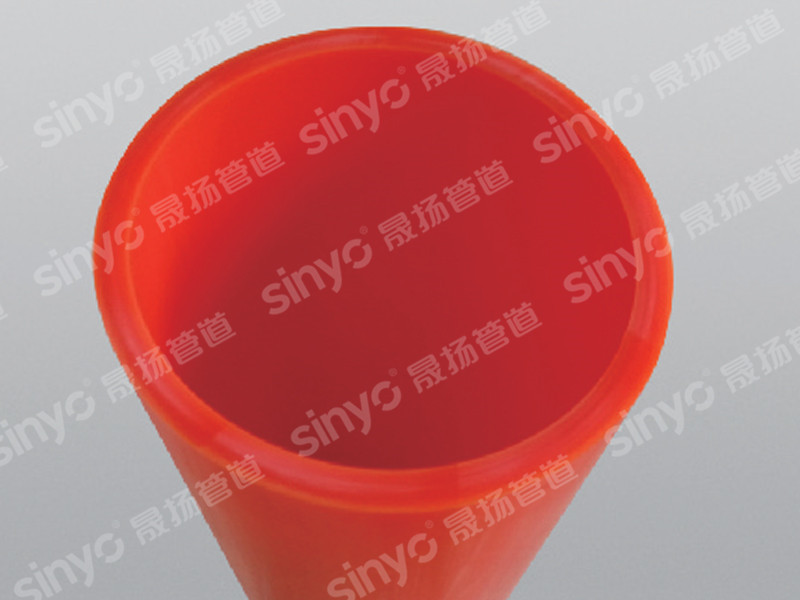
Development prospects of large-diameter (large-caliber) pressure pipes
The application of plastic pipes, both domestically and internationally, started with smaller diameters and gradually developed towards larger diameters. (There is no defined definition for large diameter; in this article, large diameter refers to diameters of 800mm and above.) It is worth noting that in recent years, there has been a major international trend towards the development of large-diameter plastic pipes, driven by environmental protection. As is well known, the world is currently facing a battle against climate change, and all countries must bear the responsibility of reducing carbon emissions. In the pipeline industry, there is undoubtedly a need to pay more attention to environmental impact.
Contact Information
Fuqing Yuanhong Investment Zone, Fujian Province
Online Message
Welcome to leave a message online, we will promptly respond and provide you with a suitable solution.