The company mainly produces a series of new plastic pipe products, including PE/PP/PVC water supply, drainage, gas, mining, chemical, municipal, and power.


About CPVC resin
CPVC is a chlorinated product of PVC, i.e., a chlorinated modification of PVC. PVC resin is the main raw material for producing CPVC resin; it must be loose and not compact.
Apr 29,2011
CPVC is a chlorinated product of PVC, namely, chlorinated modified PVC. PVC resin is the main raw material for producing CPVC resin; it must be loose and not compact. Since the processing of CPVC resin mainly uses an aqueous suspension method, and the diffusion rate of chlorine in the PVC resin has a significant impact on the chlorination rate of PVC in this process, the PVC resin film should be as thin as possible, and the surface area should not be small. Therefore, CPVC manufacturers should use special PVC resin synthesized by special auxiliary agents to synthesize CPVC resin. The CPVC resins produced by Goodrich in the United States, BASF in Germany, Sekisui in Japan, and Showa Denko all use special PVC resins for chlorination.
The performance of CPVC products mainly depends on the CPVC resin, and its processing performance is even more dependent on the CPVC resin. The key to the application and development of CPVC materials lies in the improvement and enhancement of the CPVC resin production process, and the ability to obtain special PVC resin, thus providing CPVC resin with not only excellent performance but also good processing performance.
CPVC is more difficult to process than PVC. The melt processing viscosity is at least twice that of PVC, and the melt processing temperature is also higher than that of PVC, especially in injection processing. Therefore, PVC resin with a lower degree of polymerization should be used to synthesize CPVC. For extrusion, CPVC resin with P=700 PVC resin should be selected, and for injection, CPVC resin with P=500 PVC resin should be selected.
Generally, the chlorine content of PVC is 56-59%, and that of CPVC is 64-75%. With the increase in chlorine content, the melt viscosity of CPVC increases accordingly, the softening point increases, the heat resistance improves, the density increases, the tensile strength increases, and the brittleness increases, the impact strength decreases, and the processing difficulty also increases. This method does not involve the chlorination process and technology of CPVC during synthesis, but we hope that the surface chlorine content of high-chlorine-content CPVC resin with a chlorine content greater than 70% is lower, making it easier to process.
With special formulas and processes, the performance of extruded products of domestically produced CPVC resin has reached the international advanced level, and the processing difficulty is not large, but it is difficult to process injection products using domestically produced CPVC resin. This requires CPVC manufacturers to develop domestically produced CPVC resin that is truly suitable for injection processing.
Related News
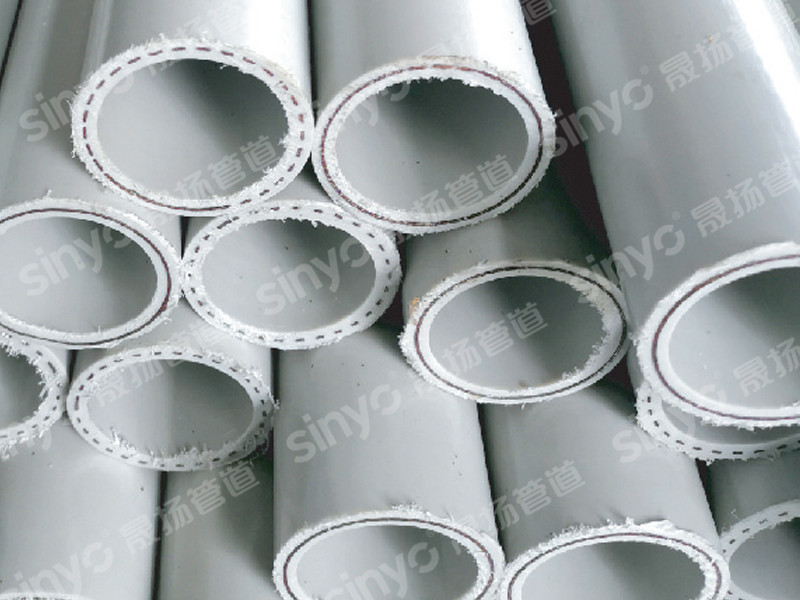
Kongwang steel strip polyethylene composite pipe
Kongwang perforated steel belt polyethylene composite pipe is a composite pipe material with a perforated steel pipe welded from cold-rolled steel strip as the reinforcing skeleton and composite thermoplastic plastic. Due to the introduction of the reinforcing skeleton, the pressure resistance of the pipe is significantly improved. Different types and grades of thermoplastic plastics can be used to produce composite pipe materials for different purposes. The perforated steel belt plastic pipes produced by the company are divided into several uses according to their uses: water supply, underground gas, hot water, chemical, and special uses.
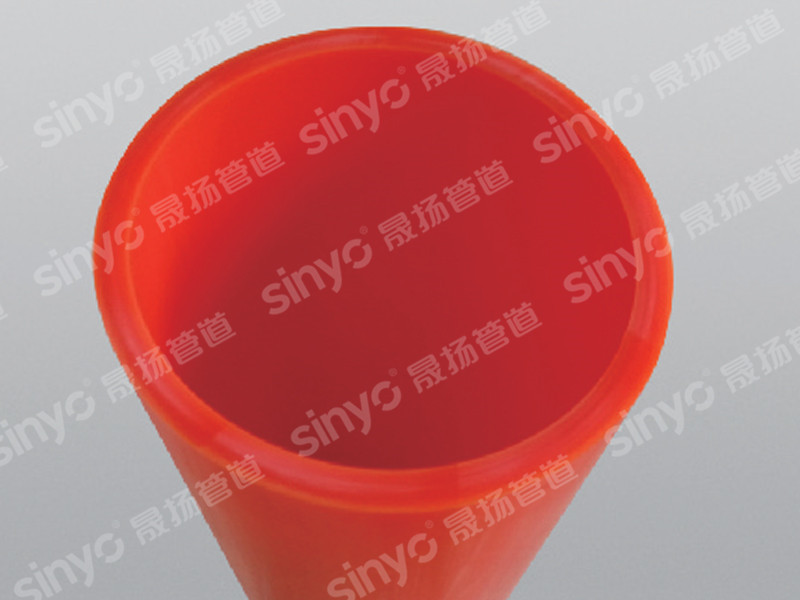
Development prospects of large-diameter (large-caliber) pressure pipes
The application of plastic pipes, both domestically and internationally, started with smaller diameters and gradually developed towards larger diameters. (There is no defined definition for large diameter; in this article, large diameter refers to diameters of 800mm and above.) It is worth noting that in recent years, there has been a major international trend towards the development of large-diameter plastic pipes, driven by environmental protection. As is well known, the world is currently facing a battle against climate change, and all countries must bear the responsibility of reducing carbon emissions. In the pipeline industry, there is undoubtedly a need to pay more attention to environmental impact.
Contact Information
Fuqing Yuanhong Investment Zone, Fujian Province
Online Message
Welcome to leave a message online, we will promptly respond and provide you with a suitable solution.