The company mainly produces a series of new plastic pipe products, including PE/PP/PVC water supply, drainage, gas, mining, chemical, municipal, and power.


Conceptual marketing planning requires skill to succeed
Apr 17,2015
Conceptual marketing is becoming increasingly prevalent. During this year's Spring Festival, Tencent successfully used the concept of red envelopes to launch a surprise attack, catching Alibaba off guard. Lei Jun's Xiaomi, utilizing the concept of internet thinking, made internet thinking a public online topic, yet only Xiaomi truly succeeded. For over a decade, the cosmetics industry has used concepts like whitening and skin rejuvenation, creating numerous well-known brands. The fast-moving consumer goods sector has employed the concepts of fried and non-fried, resulting in a range of snack and instant noodle brands. Upon reflection, conceptual marketing is nothing new. However, with the rapid development of the internet, new marketing concepts surrounding the internet have excited many bewildered entrepreneurs. However, it's important to temper their enthusiasm. Conceptual marketing isn't a new marketing model solely because of the internet; the internet has merely innovated many new terms and widely promoted such marketing concepts, leading people to perceive everything as an inevitable new trend. If businesses blindly follow suit, they may encounter difficulties.
O2O is the most tempting new concept for traditional businesses.
In recent years, the most fashionable term in the marketing world is probably O2O. This term is commonplace for internet companies, but for traditional businesses, it's like acquiring a powerful imperial decree. Why is that? Examining the marketing challenges of traditional businesses might provide clarity.
What are the challenges faced by traditional businesses? 1. Fierce market competition leading to price wars, coupled with significant increases in raw material and labor costs, severely compressing profit margins; 2. Rapidly increasing channel costs, with distributors and retail outlets pressuring businesses, pushing their tolerance for marketing costs to the limit; 3. Traditional well-known brands expanding through economies of scale, squeezing the survival space of small and medium-sized enterprises; 4. Increasingly difficult marketing management, with difficulty retaining marketing team talent, attracting high-end talent, managing increasingly disobedient distributors (who prioritize profit), and controlling the uncontrollable retail outlets, which may even exert control over businesses, imposing demands that, if unmet, result in penalties.
Faced with such immense pressure, traditional businesses, especially small and medium-sized enterprises, are truly overwhelmed. They desperately hope to break through, to find an unburdened market space where they can operate freely. However, such space no longer exists. Therefore, the timely emergence of the O2O marketing model has become a lifeline for traditional businesses. Business owners organize executives daily to study how to operate the O2O model, even neglecting the fundamental question of whether O2O is necessary, assuming that the O2O marketing model is an inevitable trend.
I believe that the O2O marketing model is undoubtedly a major trend, but it's not a simple O&O model. It's not merely adding an online channel, as some businesses believe, but requires considering the necessity of this online-offline integration for business marketing operations. Simply put, what benefits can the O2O model bring to businesses? If the O2O model only expands channels, then small and medium-sized enterprises should think carefully before acting. In fact, many businesses still have many untapped offline channels and haven't optimized their offline channels; blindly expanding online channels may not be very meaningful.
New marketing concepts are not a magic weapon, but they can be used for reference.
Clearly, these new marketing concepts are not a magic bullet to cure the marketing problems of traditional businesses. However, this doesn't mean that these new concepts are useless for business marketing. Businesses can learn from some new marketing ideas, and capable businesses can even plan for marketing trends early on.
Therefore, I believe that some new concepts touted by the internet play a crucial role in modern marketing and offer groundbreaking guidance for the marketing of traditional businesses. Of course, there are other marketing concepts based on traditional marketing theories, such as the whitening concept in cosmetics advertising, the oral care and health concept in Yunnan Baiyao toothpaste advertising, and the "non-fried, healthier" concept in Wugudaochang instant noodles advertising, etc. The former requires businesses to possess sufficient capabilities and experience to operate and execute effectively; the latter represents the basic capabilities required for traditional business marketing—it can be done, and should be done more strategically.
Only capable businesses can win with new internet marketing concepts.
Faced with the endless stream of new marketing concepts from the internet, traditional entrepreneurs are inevitably tempted. But temptation doesn't necessitate action. Businesses should ensure they possess sufficient capabilities before acting, as the marketing costs using the internet as a marketing or communication channel are equally high. If not handled well, marketing costs will be wasted, without even a ripple on the internet. That's the internet: on one hand, it's a huge gold mine that, if mined successfully, can quickly achieve dreams; on the other hand, it's a huge black hole that absorbs everything without a trace.
In the past two years, the most tempting internet concepts for traditional businesses have probably been internet thinking and O2O. Of course, this also includes new marketing concepts such as experiential marketing, content marketing, and CTB. Many businesses expect to achieve internet marketing by using internet technology to open online stores, build websites on new media, and conduct communication on internet media. This is clearly an oversimplification of internet marketing, and failure is inevitable. Internet-based new concept marketing also requires attention to the construction of a strategic system. Possessing a systematic internet marketing strategy and plan is the foundation for mastering internet-based new concept marketing. The era where businesses achieved internet marketing miracles through the foresight and insight gained from internet technology is over.
Related News
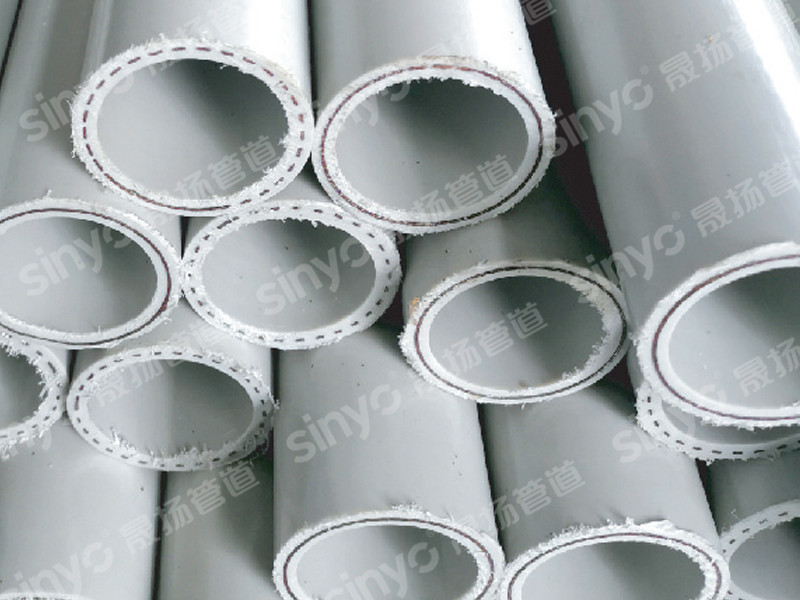
Kongwang steel strip polyethylene composite pipe
Kongwang perforated steel belt polyethylene composite pipe is a composite pipe material with a perforated steel pipe welded from cold-rolled steel strip as the reinforcing skeleton and composite thermoplastic plastic. Due to the introduction of the reinforcing skeleton, the pressure resistance of the pipe is significantly improved. Different types and grades of thermoplastic plastics can be used to produce composite pipe materials for different purposes. The perforated steel belt plastic pipes produced by the company are divided into several uses according to their uses: water supply, underground gas, hot water, chemical, and special uses.

Development prospects of large-diameter (large-caliber) pressure pipes
The application of plastic pipes, both domestically and internationally, started with smaller diameters and gradually developed towards larger diameters. (There is no defined definition for large diameter; in this article, large diameter refers to diameters of 800mm and above.) It is worth noting that in recent years, there has been a major international trend towards the development of large-diameter plastic pipes, driven by environmental protection. As is well known, the world is currently facing a battle against climate change, and all countries must bear the responsibility of reducing carbon emissions. In the pipeline industry, there is undoubtedly a need to pay more attention to environmental impact.
Contact Information
Fuqing Yuanhong Investment Zone, Fujian Province
Online Message
Welcome to leave a message online, we will promptly respond and provide you with a suitable solution.